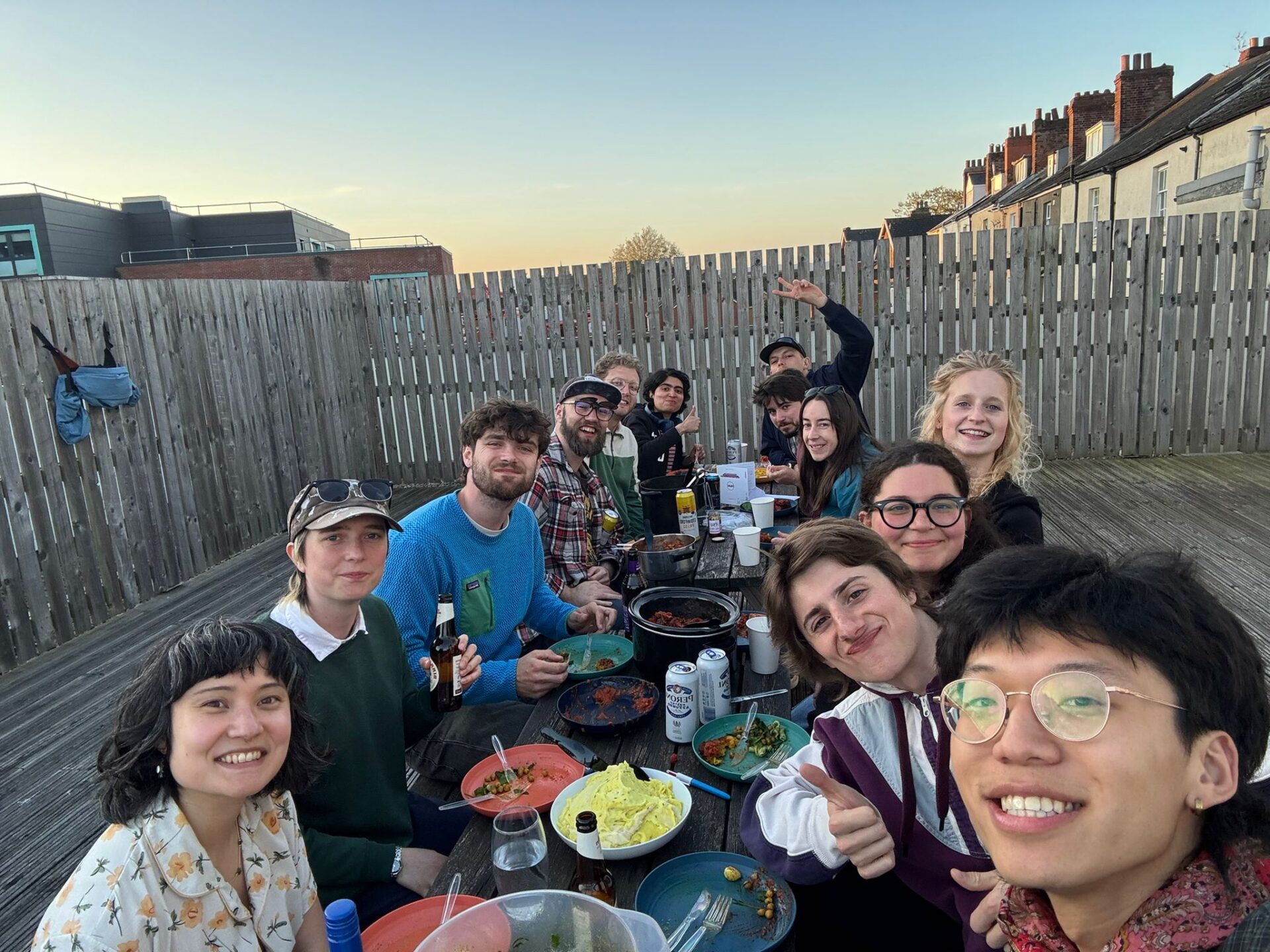
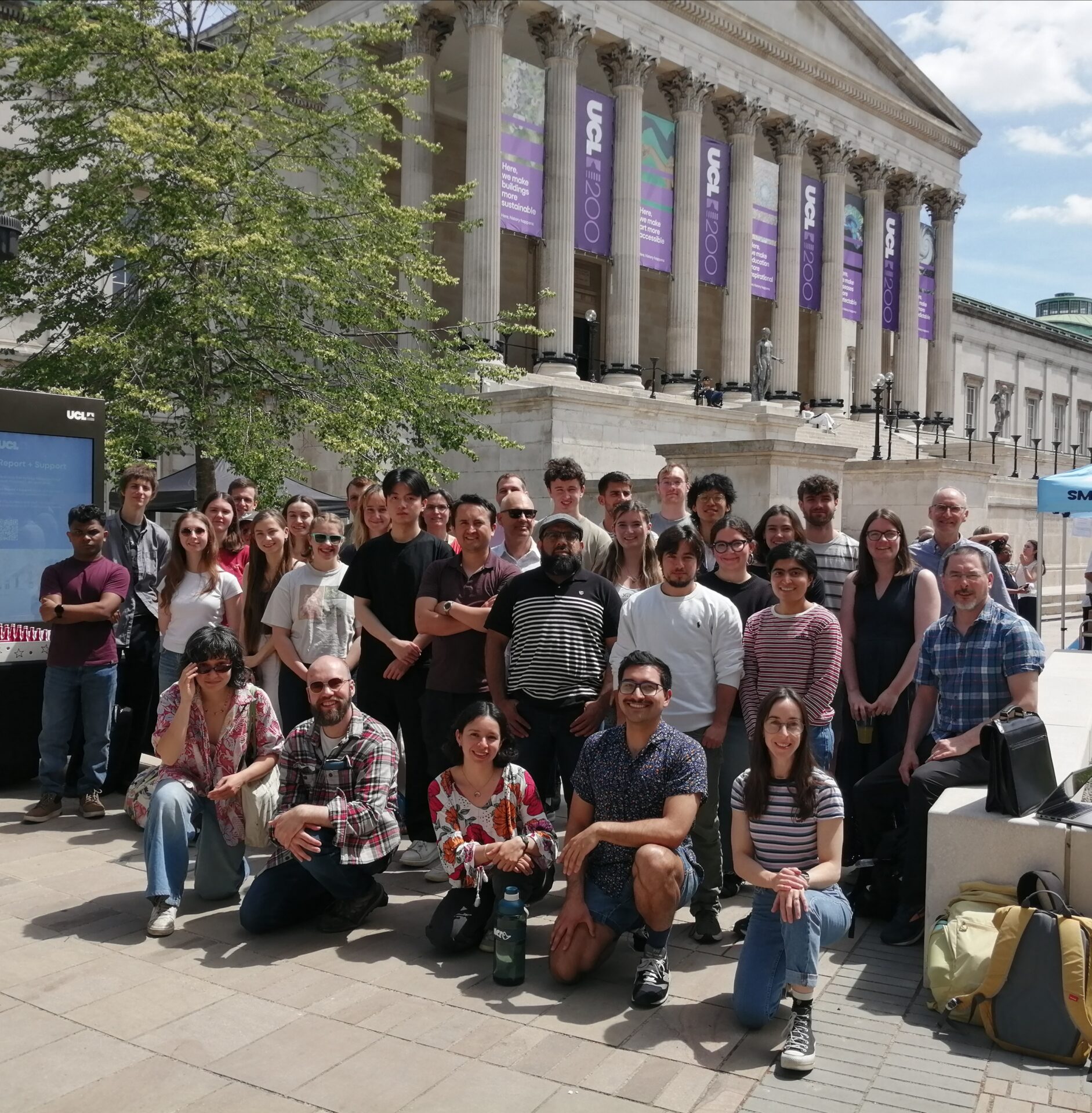
UNRISK students came together for the 3rd and final workshop of the 25/26 academic year, at UCL in London 15th-19th June.
Alongside a cohort of students funded by the ARIA programme, they worked together in groups to solve ‘role play’ challenges set by clients in the area of decisions science. The challenge was to communicate climate data to stakeholders and policy makers to enable effective decisions.
Talks, including from Sarah Dryhurst on the perception of risk, set up the group activities. One key message from Sarah’s talk was the concept that “risk does not exist independent of our minds and culture,” demonstrating how personal experiences, emotions, and social influences can shape the way people understand risk. UNRISK team member Erica Thompson led a session considering the ethics of communicating uncertainty to the public, including policymakers.
On the third and fourth days, students took part in educational visits to organisations including the Bank of England, AxaXL, and Climate X. These trips provided an opportunity to see how the concepts discussed during the programme are applied in real-world settings. Following the visits, students returned to their project groups to prepare their final presentations. Students found it valuable to see how organisations assess and manage risk in practice, as well as the decision-making processes used.
A networking lunch was held on Tuesday 16th for both student cohorts, supervisors and other researchers linked to the programmes.
A prize was awarded for the “best group project delivering climate information for decision-makers”. Charles Benoist and Qien Cai were the UNRISK students on the winning team for their work looking at provision of climate information for Maritime Greenwich.
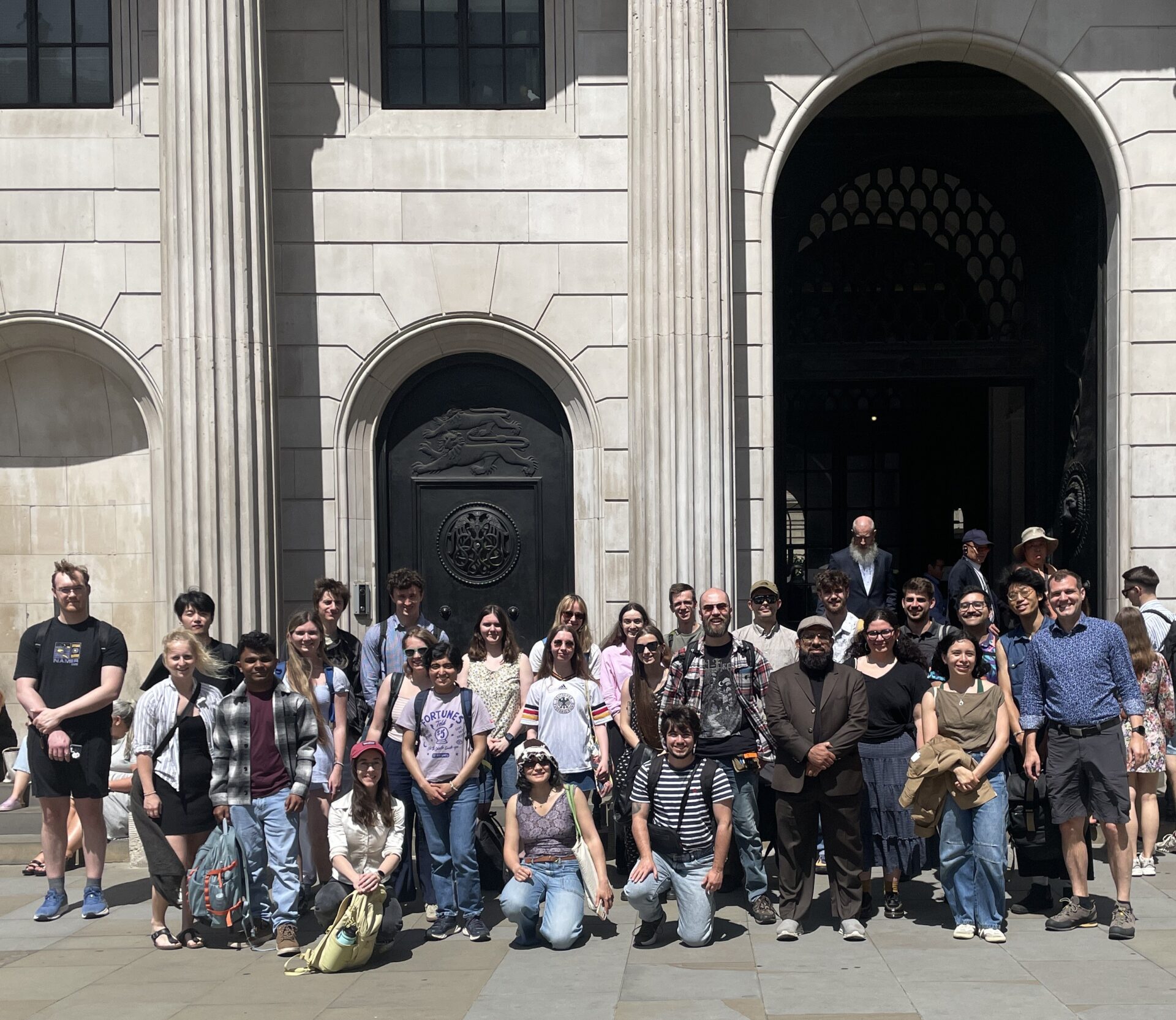
Group photo – UNRISK and ARIA students at Bank of England
Reflections on the UCL week – Soffie and Beth
Beth Dunstan, PhD researcher, UCL
My PhD looks at how people perceive threats from climate change, how those perceptions change across time and space, and how they align (or fail to align) with measured levels of environmental risk. Using the World Risk Poll and related datasets, I’m exploring where uncertainty emerges, where communication fails, and how lived experience shape responses to climate hazards, with the aim of supporting more effective risk reduction and climate resilience. This summer’s UNRISK training week at UCL ended up feeling particularly relevant, with one question repeatedly coming through our discussions on participatory decision-making, science communication, and climate action: “are we limited by the information we have, or by how we use it?”
Sophia Wisniewska, PhD Researcher, Leeds
My PhD focuses on quantifying and reducing uncertainty in the role of stratocumulus clouds in climate change. Clouds remain one of the largest sources of uncertainty in climate projections, and my research uses perturbed parameter ensembles and Gaussian process emulation to investigate how cloud responses are influenced by uncertainties in physical, microphysical and aerosol–cloud interaction processes. As someone in a highly technical PhD, I approached the UNRISK training week as an opportunity to engage with topics that sit outside my usual research focus.
Participatory decision-making
At the beginning of the week, we explored risk communication and decision-making under uncertainty. The latter session, led by Dr Andrea Taylor, took us through the history of decision theory, challenging assumptions of what constitutes ‘good’ decision-making. We discussed normative models (how people should decide), descriptive models (how people actually decide), and prescriptive approaches (how we might support better decisions in practice) [1]. Whilst ‘thinking slow’ [2] to fully weigh up multiple possible decisions is often championed over more intuitive, heuristic-based approaches, we were challenged to think of its place in climate science, where uncertainty is deep and many decisions must be made before consequences fully emerge. This concept became particularly real during our group project to advise a client (the National Trust) on climate adaptation. As each new dataset on ecology, temperature projections, rainfall, cultural heritage assets, land use and geology was added, what began as a straightforward advisory task quickly became a reminder that climate decisions are rarely neat or self-contained.
Beth: I was particularly interested in the concept of ‘recognition-primed decision making’ (RPD) [3]: the idea that experts often make good decisions, not by exhaustively comparing options, but by recognising patterns built through experience. RPD is usually used in fast-paced, pressured environments, contrasting to the longer climate timescales, however it got me thinking more broadly about the role of expertise in climate decision-making. In the age of social media, democratised information, and increasingly accessible AI tools, it can feel like anyone can become an ‘instant expert,’ but RPD suggests that good judgement goes beyond information collection, into deeper domain understanding, lived experience, pattern recognition and contextual clues built over time. As PhD students, developing this deeper understanding is a large part of what we are trying to achieve, but our discussions also highlighted that people living with risk, local communities, and practitioners all hold forms of knowledge and experience that matter deeply. Indeed, good climate decisions are not simply made for people, but with them.
Soffie: I was particularly struck by the discussion around the psychology of risk and how perceptions of risk are shaped by far more than just objective evidence. Factors such as emotions, cultural values, demographic background, and prior experience can all influence how individuals interpret and respond to uncertainty. Coming from a highly technical PhD background, I spend much of my time focused on generating and analysing data, rather than considering how uncertainty is communicated to different audiences. This session highlighted the importance of recognising that effective risk communication is not simply about presenting facts, but also about understanding how people process information and make decisions. It prompted me to reflect on the responsibility climate scientists have to communicate uncertainty clearly and meaningfully, particularly when working with stakeholders and the wider public.
Science communication
Our second set of sessions built upon this idea of what and who we include in decision-making, by diving into research ethics, communication and stakeholder engagement. A workshop with Dr Erica Thompson focused on what makes information credible, salient and legitimate, and how quickly those qualities can be weakened when scientific uncertainty becomes interpreted as disagreement, or when topics like climate and health become absorbed into wider political identities or advocacy.
Beth: The sessions on climate communication connected strongly to my own research. Climate communication is often framed as a knowledge gap: if people understood the evidence better, behaviour would change. But risk perception research repeatedly suggests otherwise. Our attitudes and behaviour are deeply influenced by our values, social norms, experience, trust and whether information feels relevant. We learnt that communication is not simply about translating scientific findings into simpler language or persuading people to agree. It is about understanding audiences, listening as well as informing, and building information that people can actually use in decisions.
This lesson was reflected in our panel discussions on stakeholder engagement, where we heard stories and advice from scientists who have worked with policy makers, journalists and local communities. One piece of advice that stuck with me was not to hand people findings and expect them to do the interpretation themselves. As scientists, we must translate them: a process which requires thinking about who is using the information and what decision they are actually trying to make.
Soffie: These sessions on climate communication helped me think more critically about how my own research fits into a wider societal context. My project focuses on quantifying uncertainty in cloud feedbacks, a topic that is highly technical and often difficult to communicate beyond specialist audiences. Through the discussions, I realised that generating robust scientific evidence is only one part of the process; ensuring that the implications of that evidence are understood by different stakeholders is equally important. The sessions highlighted the need to tailor communication to different audiences, whether they are policymakers, practitioners, journalists or members of the public, and to consider what information is most relevant to the decisions they face. Going forward, I will be thinking more carefully about how to communicate uncertainty in a way that is both scientifically accurate and meaningful to those who may use my research.
Climate action
During the latter half of the week, we visited several organisations working in climate risk, which helped bring the week’s themes into a more applied context. The visit to ClimateX, a climate risk intelligence consultancy for financial services and real estate owners, was a refreshing look into how research and development are conducted outside of an academic setting. We had several talks from scientists in the business who were developing risk models and frameworks for financial services. We also visited the Bank of England, where we had a discussion with the director of climate risk about the impact of climate change on the financial system.
Beth: It was these visits that really brought home the question of “are we limited by the information we have, or by how we use it?” A sobering session on tipping points and possible AMOC collapse at the Bank of England reminded me that uncertainty is not always a sign that more data is needed. Perhaps the constraint is less about understanding the system in ever greater detail, and more about how we respond to the knowledge we already have. Indeed, as we become increasingly rich in data, models and projections, the challenge now lies in ensuring this knowledge is effectively translated into coordinated action.
Soffie: The partner visits were particularly valuable in showing how the concepts we had discussed throughout the week are applied in practice. Seeing organisations such as ClimateX and the Bank of England grapple with climate risk highlighted the real-world challenges of translating scientific evidence into actionable decisions. It was interesting to see how risk communication, stakeholder engagement, and differing perceptions of uncertainty all play a role in shaping responses to climate change, particularly in sectors where decisions have significant financial and societal consequences. These visits reinforced the idea that producing robust science is only part of the challenge – ensuring that evidence is communicated effectively and incorporated into decision-making processes is equally important. They also provided a useful perspective on the diverse ways climate science can be applied beyond academia to support adaptation and resilience.
[1] Bell, D. E., Raiffa, H., & Tversky, A. (Eds.). (1988). Decision making: Descriptive, normative, and prescriptive interactions. Cambridge University Press.
[2] Kahneman, D. (2011). Thinking, fast and slow. Farrar, Straus and Giroux.
[3] Klein, G. A. (1993). A recognition-primed decision (RPD) model of rapid decision making.