UNRISK Equity, Diversity and Inclusion Statement
At UNRISK, we are committed to providing a culture of inclusion, respect and equity of opportunity that attracts, supports, and retains the best students and staff from all backgrounds and from across the world. We are always striving to increase the diversity of our community, which each individual helps enrich and cultivate. We particularly encourage applications from, but not limited to Black, Asian, people who belong to a minority ethnic community; people who identify as LGBT+; and disabled people.
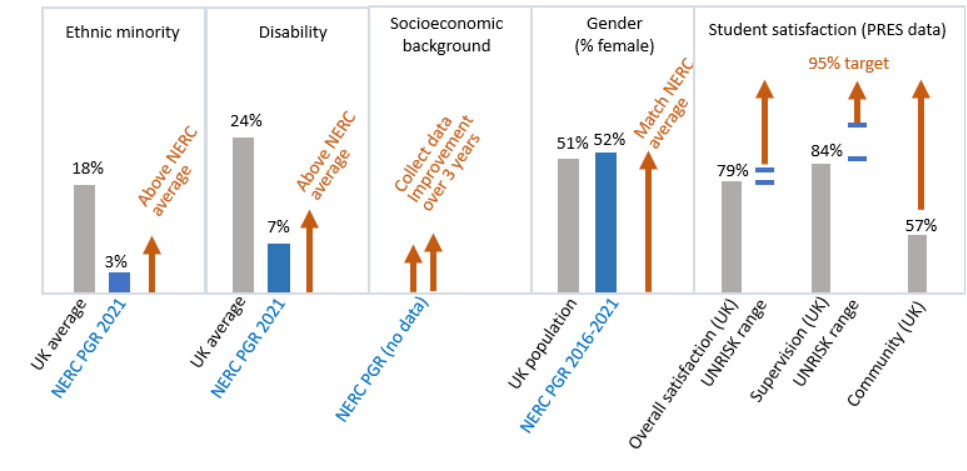
We have identified that minority ethnic and disabled communities are currently underrepresented in the environmental PhD sector based on UKRI EDI Data. We particularly welcome applications from these communities. Candidates will always be selected based on merit and ability.
Key EDI Actions
We are committed to embedding equity, diversity and inclusion throughout the entire student journey. Key actions include:
- Inclusive recruitment practices, including diverse interview panels, structured assessment processes and regular review of recruitment outcomes.
- Monitoring applicant, interview and student diversity data to identify barriers and evaluate the impact of interventions.
- Ring-fenced studentships and targeted outreach activities to support groups currently underrepresented within environmental research.
- Accessibility and reasonable adjustments for applicants, students, placements, training events and fieldwork.
- Financial support mechanisms designed to reduce barriers to participation and student success.
- Student representation and regular feedback opportunities to ensure student voices shape programme development.
- An inclusive research culture that promotes belonging, wellbeing, respect and psychological safety.
- Flexible approaches to training, placements and engagement activities to accommodate individual circumstances.
- Collaboration with UKRI, universities, CDTs and sector partners to share good practice and drive wider systemic change.
We regularly review our policies, practices and data to identify opportunities for improvement and ensure that EDI remains embedded across all aspects of the programme.